• Home
  • The Book
  • Assessment
    • Impact Assessment
    • Relationship Assessment
  • Articles
    • Emotional Disconnection
    • Blog
  • About
  • More
    • Home
    • The Book
    • Assessment
      • Impact Assessment
      • Relationship Assessment
    • Articles
      • Emotional Disconnection
      • Blog
    • About
  • Sign In
  • Create Account

  • Orders
  • My Account
  • Signed in as:

  • filler@godaddy.com


  • Orders
  • My Account
  • Sign out

Signed in as:

filler@godaddy.com

  • Home
  • The Book
  • Assessment
    • Impact Assessment
    • Relationship Assessment
  • Articles
    • Emotional Disconnection
    • Blog
  • About

Account

  • Orders
  • My Account
  • Sign out

  • Sign In
  • Orders
  • My Account

THE DISTANCE USUALLY STARTS LONG BEFORE ANYONE NOTICES

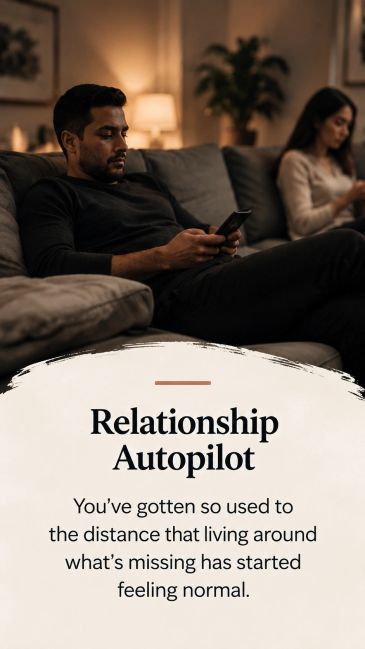
 Emotional distance in marriage usually doesn't begin with one big moment. It builds through smaller changes that are easy to explain away while you're living through them.


You talk, but not like you used to. Certain conversations stop happening. One of you starts pulling back. You get tired of bringing up the same things, and eventually you start adjusting to what isn't changing.


That's how something that once bothered you can slowly become something you just live with.


The Relationship Assessment helps you recognize where emotional distance may be showing up in your marriage and which pattern most closely reflects what you're experiencing right now.

START THE ASSESSMENT

Private. Reflective. Takes less than 2 minutes.

NOT EVERY RELATIONSHIP STRUGGLE LOOKS LOUD

Some patterns become so normal that couples stop recognizing them while they are happening.

Most Couples Don’t Notice The Drift While It’s Happening

Emotional distance rarely begins with one major moment.
It usually forms quietly through repeated patterns couples slowly adapt to over time. 

Functional Conversations

Functional Conversations

Functional Conversations

You still talk, but most conversations are about what needs to happen. The conversations that make you feel close happen less and less. 

Emotional Survival Mode

Functional Conversations

Functional Conversations

You stop bringing certain things up because you're tired of the same conversation, the same tension, or getting your hopes up again. 

Quiet Loneliness

Functional Conversations

Quiet Loneliness

You're still sharing a life, but you don't feel as seen, wanted, understood, or emotionally close as you used to. 

Not Every Relationship Problem Looks Like A Crisis

Many couples spend years adjusting to emotional distance before realizing how much has changed between them. 


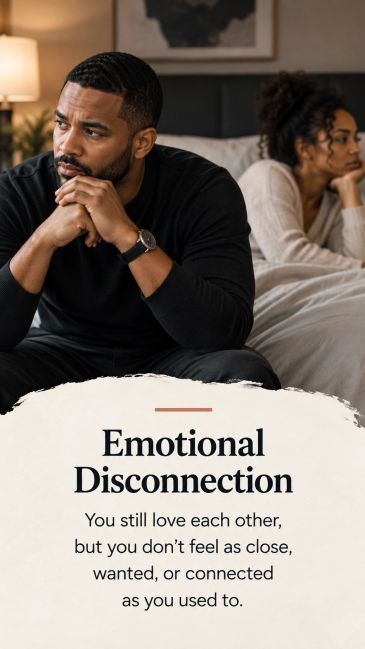
Not because they stopped loving each other.


Emotional disconnection often develops quietly through routine, emotional exhaustion, unresolved conversations, and learning to live around what isn’t changing. 


Over time, couples normalize:

⬩➤ shorter conversations 

⬩➤ emotional avoidance 

⬩➤ functional communication 

⬩➤ quiet loneliness 

⬩➤ emotional shutdown 

until distance simply begins to feel familiar.


This assessment was designed to help identify the emotional patterns many relationships quietly adapt to long before anyone calls it a problem.

Begin The Relationship Assessment

Private. Reflective. Designed to take less than 3 minutes.

Some Patterns Feel Normal Until You Finally See Them Clearly

This assessment was designed to help identify emotional relationship patterns that often go unnoticed while couples are still living inside them.

Begin The Relationship Assessment

See What Pattern Your Relationship May Be In.

Private. Reflective. No judgment. No public results. Just honest reflection.

Copyright © 2026 Lazy Marriage | All Rights Reserved.


Lazy Marriage provides educational relationship content 

intended for informational purposes only and is not a 

substitute for licensed professional, psychological, 

or legal advice. 

  • Privacy Policy
  • Terms of Use
  • Shipping & Refund Policy
  • Terms and Conditions

This website uses cookies.

We use cookies to analyze website traffic and optimize your website experience. By accepting our use of cookies, your data will be aggregated with all other user data.

DeclineAccept